Kapıcılar Kralı
Let me clear something up first. I’m not doing a "review" or anything here. This is just a place where I vomit my thoughts about the media I consume. So, I don't follow any specific template or loop. I just watch the movie and bring up whatever stuck in my head. I don't usually talk about the plot or the quality of the writing in deep detail. But for this specific movie, I’m gonna make an exception and dive into the details a bit more. Because honestly, whoever is reading this most likely know nothing about this movie, the era it was shot in, or its jargon.
Yeşilçam is the name given to the Turkish film industry between 1950 and 1980. It’s basically like Hollywood. The name comes from a street where the actors, directors, and production companies of that era were located.
It’s very similar to the Old Hollywood era; there are specific star names, and movies are literally built around them. When you think of romance, Tarık Akan comes to mind, and when you think of comedy, Kemal Sunal (who is also the lead actor of this movie) comes to mind.
The resources were extremely limited, the equipment was ancient, and the budgets were laughably small. However, there was a deeply rooted theater culture coming all the way from the Ottoman era, along with incredibly talented writers and actors raised within that culture. Long story short, Yeşilçam movies are low-budget, deeply genuine works.
As for Kapıcılar Kralı (The King of Doormen), it was shot during the golden age of Yeşilçam. It’s one of the very first movies where Kemal Sunal—who would later be recognized as the absolute greatest master of that era—played the lead role. The director and the writing crew were also the best of the best at the time.
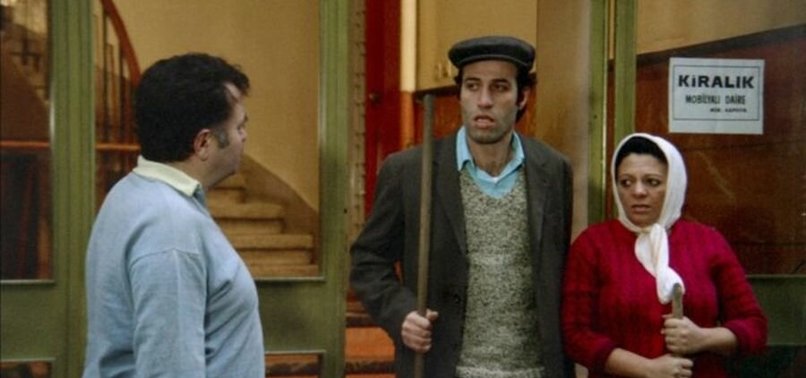
The movie tells the story of a man named Seyyid, played by Kemal Sunal, who moved from his village to the city with his family and works as a "kapıcı" (doorman/building superintendent). A kapıcı is a profession that doesn't really exist anymore. Back then, these individuals served in apartment buildings, responsible for cleaning the building and running errands for the residents. Seyyid is a villager, and he is illiterate. Because of this, he is constantly insulted and looked down upon by the apartment residents. At the beginning of the movie, the current building manager resigns, and a retired colonel takes his place. Compared to the previous manager, the Colonel is way more ruthless; he overburdens Seyyid with work, pushes him to his limits, and treats him like dirt. At the same time, there is a couple who moves into the top floor just to rob one of the residents. By the end of the movie, Seyyid exposes these thieves. On top of that, he had been saving all the tips and money he gathered over the years with his loan-shark neighbor, and with the interest, he buys 51% of the building, becoming the new majority owner. People's attitude toward him shifts instantly, but he just keeps working as the doorman anyway.
The movie is actually a straight up critique of Turkey during that era. The building itself represents the country. At the very bottom lives the doorman Seyyid, representing the working class. One floor up is a civil servant family, representing the bureaucracy. Above them is a politician. Above him is a gossiping old lady, representing the media. One floor higher is the Colonel, representing the military, and at the very top is the loan shark, representing the capital owners.
This is the social hierarchy of that era. And yeah, back then, the media was actually positioned above politics. They could literally take down politicians whenever they wanted by creating public pressure.
Of course, there are even more details hidden in there. For example, the fact that Seyyid gets along well with the bureaucracy... Or how the residents force the politician to go and talk to a troublesome neighbor, but nobody actually backs him up when he does. that’s a direct jab at the political infrastructure of that time.
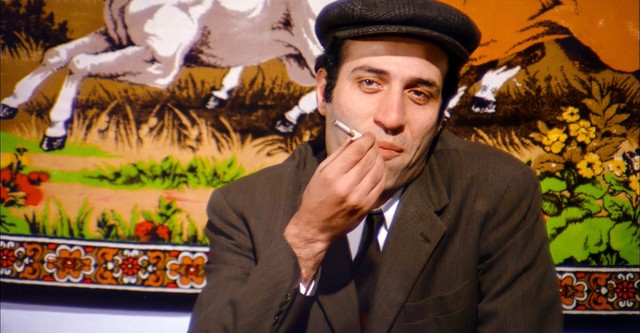
I also don't think it's a coincidence that the thief couple settles on the very top floor. The movie is basically saying "you can't get to the top without stealing," which is kind of true in a way. After all, Seyyid himself buys the building through some pretty sketchy methods. But in reality, all he wants is better working conditions, because he goes right back to being the doorman in the end. Seyyid himself isn't exactly a saint either. He sells alcohol at exorbitant prices. He wipes the bureaucrat's debt from the grocery store's tab and charges it to the Colonel instead. He doesn't treat his family that well either. But the movie doesn't flag these actions as "EVIL." Let’s just call it the mindset of that era and leave it at that.
As for the general characters, they aren't written with much depth. That’s usually how it goes in Yeşilçam. Instead of fully fleshed out characters, you mostly get stock theater archetypes: the heavy drinker, the aggressive guy, the gossiping woman, the villager who migrated to the city, etc. They are 2D characters, you know? It's not necessarily a bad thing, just a stylistic choice. And it was used a lot back then. Umur Bugay, the screenwriter, usually keeps the plot and characters simple like this. He delivers the messages he wants to send subtly through metaphors.
Unfortunately, the narrative isn't all that great. The events don't follow a solid linear progression. The story just moves along as a 'slice of life' look at apartment drama. While this method could actually be good for getting to know the characters or diving into their depths, since the characters are so one dimensional and show zero development, these parts end up feeling like pure filler. The acting is good for its time, though it might look weird today. It relies heavily on extreme facial expressions and over the top gestures. It was normal back then, but it's not really used anymore. Think of it like Jim Carrey's style.
So, overall, despite having plenty of flaws considering its age, it’s a movie that has actually aged pretty well. I wrote way longer than usual and this turned out to be a more traditional essay. I probably won't write like this again for a long ass time because it’s exhausting as hell. Let's just go back to our usual style.